

Heavy Silver Hinged Bracelet (Kadla / Kada)
Kutch, Gujarat, Western India
Rabari or Ahir
Early 20th century (c. 1900–1930)
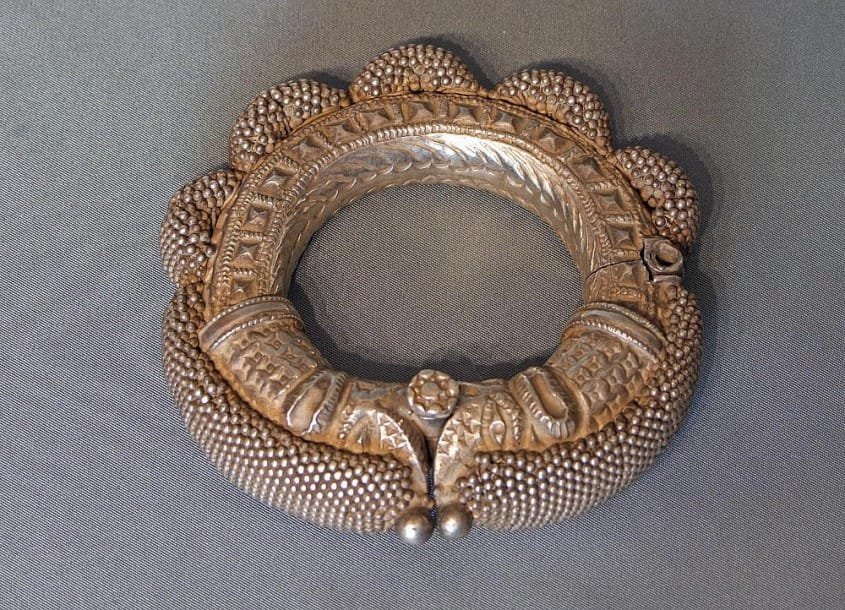
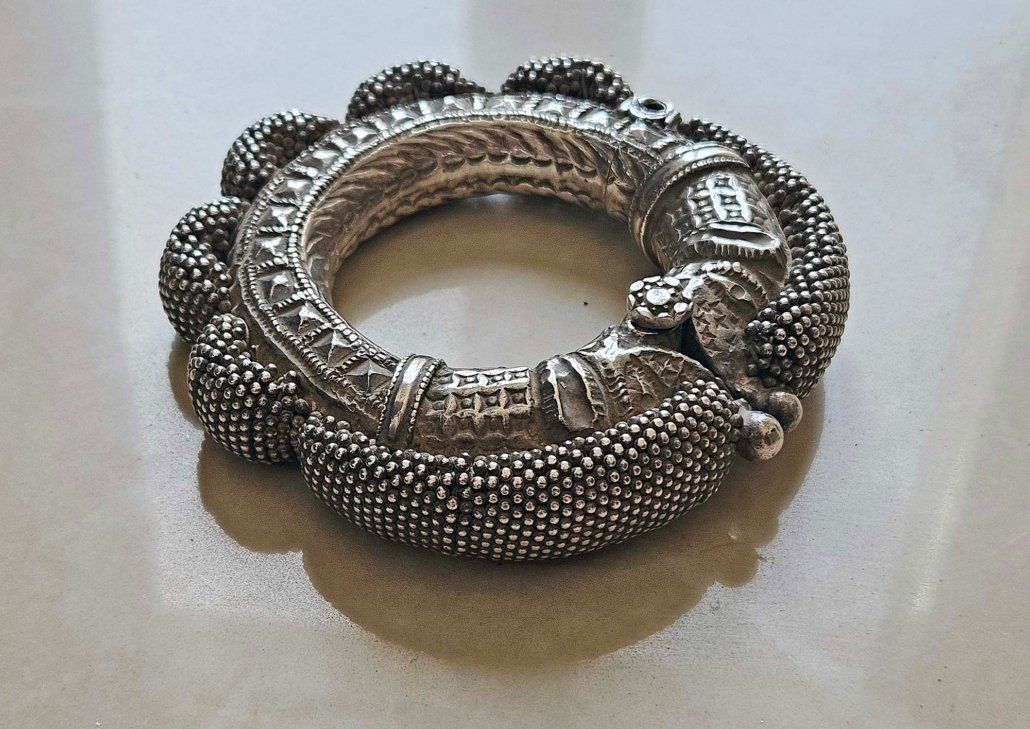
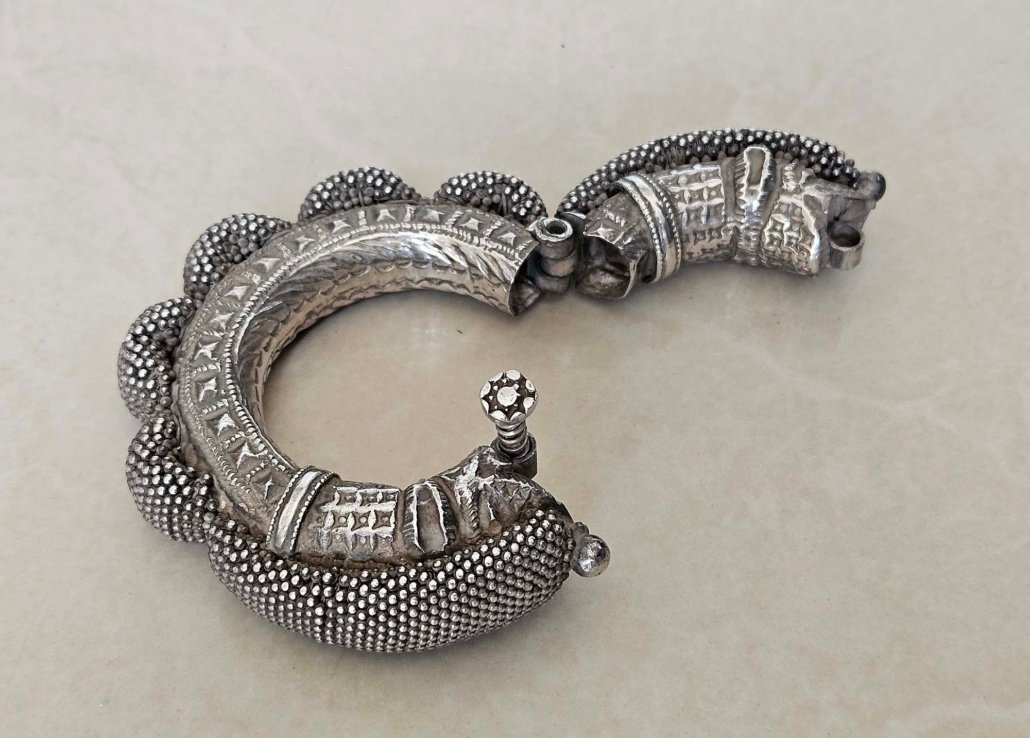
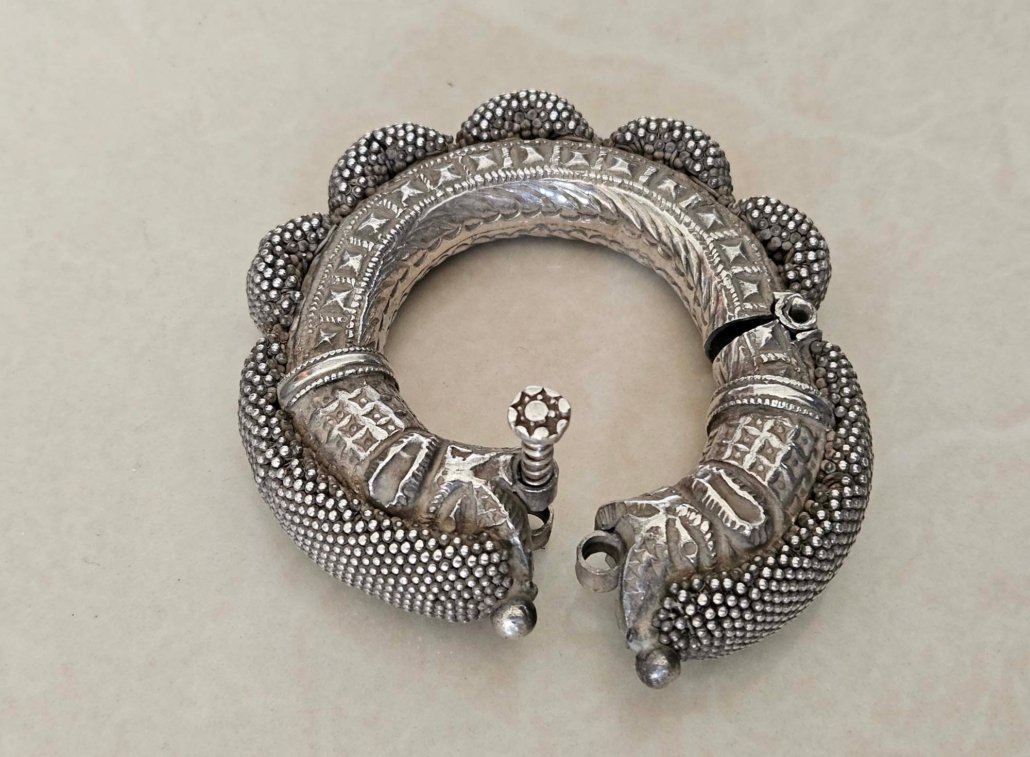
A magnificent heavy silver kadla (also known as kada), originating from the Kutch region of Gujarat in northwestern India, an area renowned for its exceptional silversmithing traditions. This type of bracelet was traditionally worn by Rabari or Ahir women on ceremonial occasions, particularly weddings, and served not only as an ornament but also as a visible symbol of wealth, social status, and personal security.
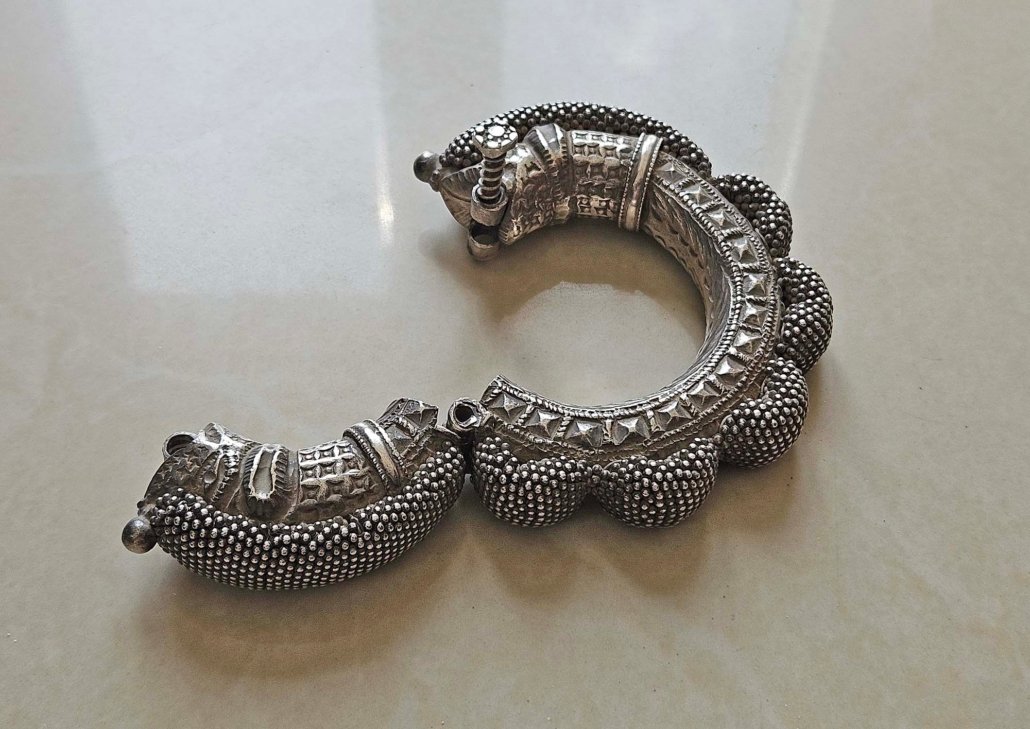
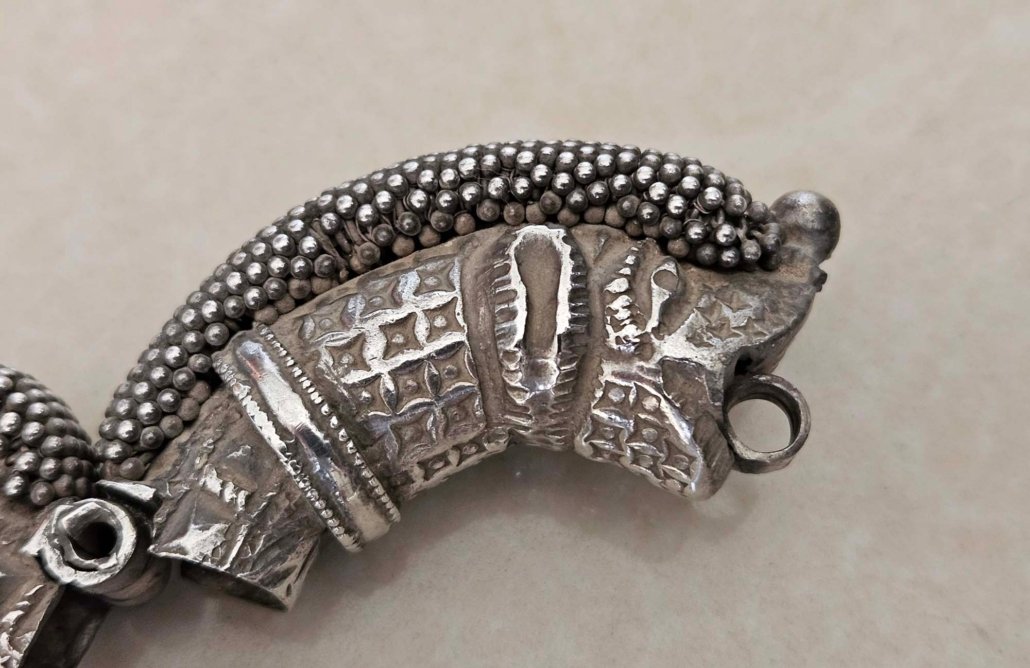
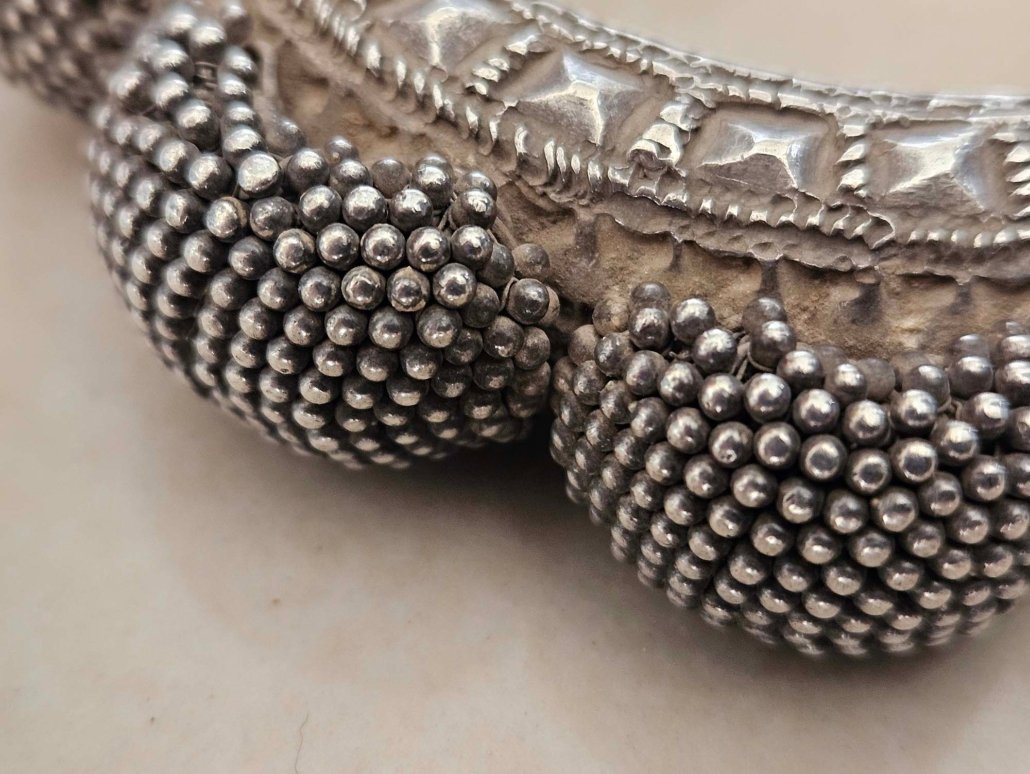
The bracelet is of hollow-cast construction and consists of two hinged halves secured by its original screw fastening with a finely shaped star-form terminal. The surface is richly decorated with geometric punchwork and remarkable applied granulation (rawa), created from hundreds of individually formed and soldered silver beads. This highly skilled technique represents one of the finest achievements of traditional Indian silver craftsmanship.
The dense clusters of silver granules are more than decorative. In traditional symbolism they are associated with abundance, fertility, prosperity, numerous offspring, and flourishing livestock—the principal measure of wealth among the pastoral communities of Kutch. The richly textured surface was also believed to provide protection against the evil eye by reflecting and dispersing harmful influences.
The bracelet retains its original screw closure and displays a fine natural patina acquired through age and use.
Weight: 250 g.
An authentic and unusually well-preserved example of early twentieth-century tribal silver jewellery from western India, combining exceptional craftsmanship with profound cultural symbolism.
raj12-erlo-ESOE